
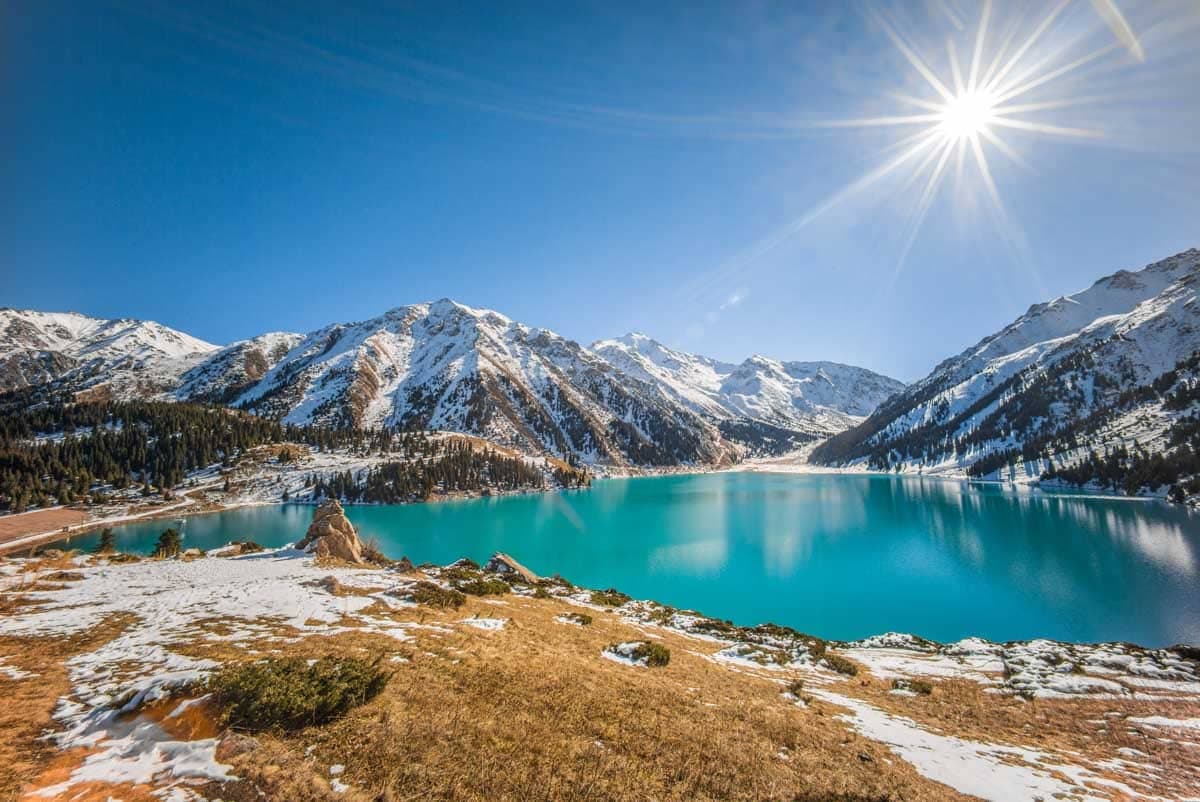
Kazakhstan is the world's largest landlocked country, offering diverse landscapes from the futuristic capital Astana (Nur-Sultan) with its space-age architecture to the cosmopolitan Almaty nestled against Tian Shan mountains. Natural wonders include the red rock formations of Charyn Canyon, the alpine lakes of Kolsai and Kaindy, and the vast Kazakh steppes where nomadic culture persists. The country preserves Silk Road heritage in cities like Turkestan. Soviet-era monuments and buildings contrast with modern development. Kazakh culture celebrates eagle hunting, traditional yurts, horseback riding, and fermented mare's milk (kumis). The country's ethnic diversity includes Kazakh, Russian, Uzbek, and other Central Asian groups.
Best time to visit:
May-September for most regions; April-June and September-October ideal; Winter very cold but good for winter sports
Nomadic Heritage & Natural Beauty
Kazakhstan's nomadic heritage is preserved in traditional felt-making, horseback culture, and yurt dwellings still used by herders. The country's landscapes range from Altai Mountains in the east to Caspian Sea shores in the west, with Charyn Canyon rivaling the Grand Canyon on a smaller scale. Almaty offers skiing at Shymbulak resort, while the Kolsai Lakes provide pristine hiking. The space program maintains the Baikonur Cosmodrome where Soviet and now Russian rockets launch. Kazakh cuisine features beshbarmak (boiled meat with noodles), plov, and horsemeat delicacies. The country's position on the ancient Silk Road left architectural treasures and a tradition of hospitality. Petroglyphs at Tamgaly showcase ancient rock art.