
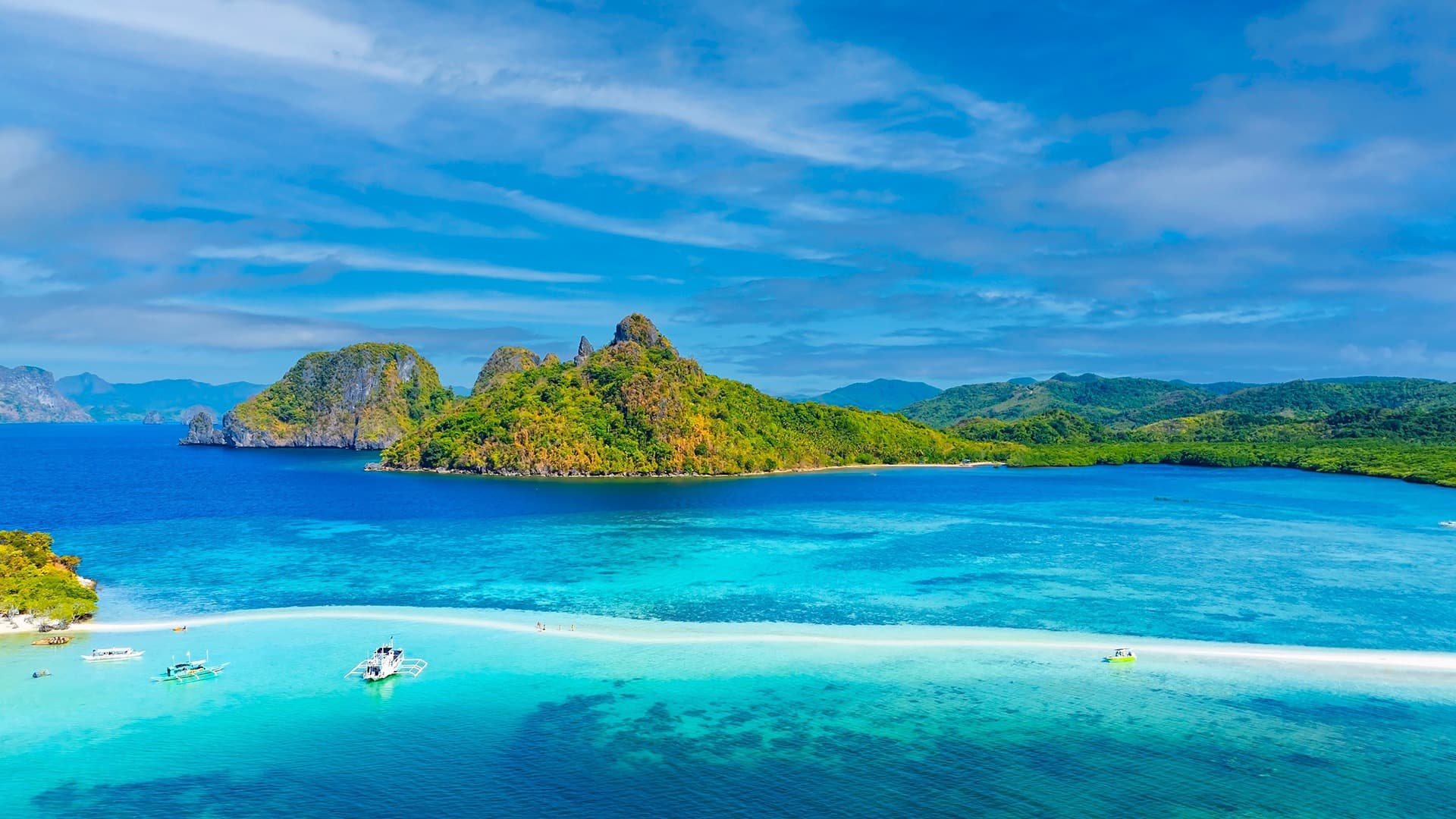
The Philippines archipelago offers incredible island diversity, from the limestone cliffs and crystal lagoons of El Nido and Coron to the white powdery beaches of Boracay. World-class diving sites include Tubbataha Reef, Apo Island, and Moalboal's sardine run. The Banaue Rice Terraces demonstrate 2,000 years of indigenous Ifugao engineering. Manila blends Spanish colonial heritage with modern megacity energy. Chocolate Hills in Bohol create surreal landscapes, while Taal Volcano sits within a lake. The Philippines' mix of Spanish, American, and Asian influences creates unique culture and cuisine. Filipino hospitality makes travelers feel welcome across the islands. Festivals like Sinulog and Ati-Atihan showcase colorful celebrations.
Best time to visit:
November to May (dry season); December to February coolest; Avoid typhoon season (June-November) though some regions differ
Island Paradise & Marine Wonders
The Philippines ranks among the world's top diving destinations, with coral reefs teeming with biodiversity, whale shark encounters in Donsol and Oslob, and wreck diving from WWII ships. Island-hopping reveals hidden lagoons, secret beaches, and uninhabited islets. Palawan's Puerto Princesa Underground River flows through limestone caves. Spanish colonial churches, forts, and the walled city of Intramuros preserve 300+ years of colonial history. Filipino cuisine blends Malay, Spanish, Chinese, and American influences in dishes like adobo, lechon (roasted pig), and halo-halo dessert. Indigenous cultures persist in Cordillera mountain tribes and southern Muslim communities. The country's festivals, hospitality, and natural beauty create memorable experiences despite occasional infrastructure challenges.