
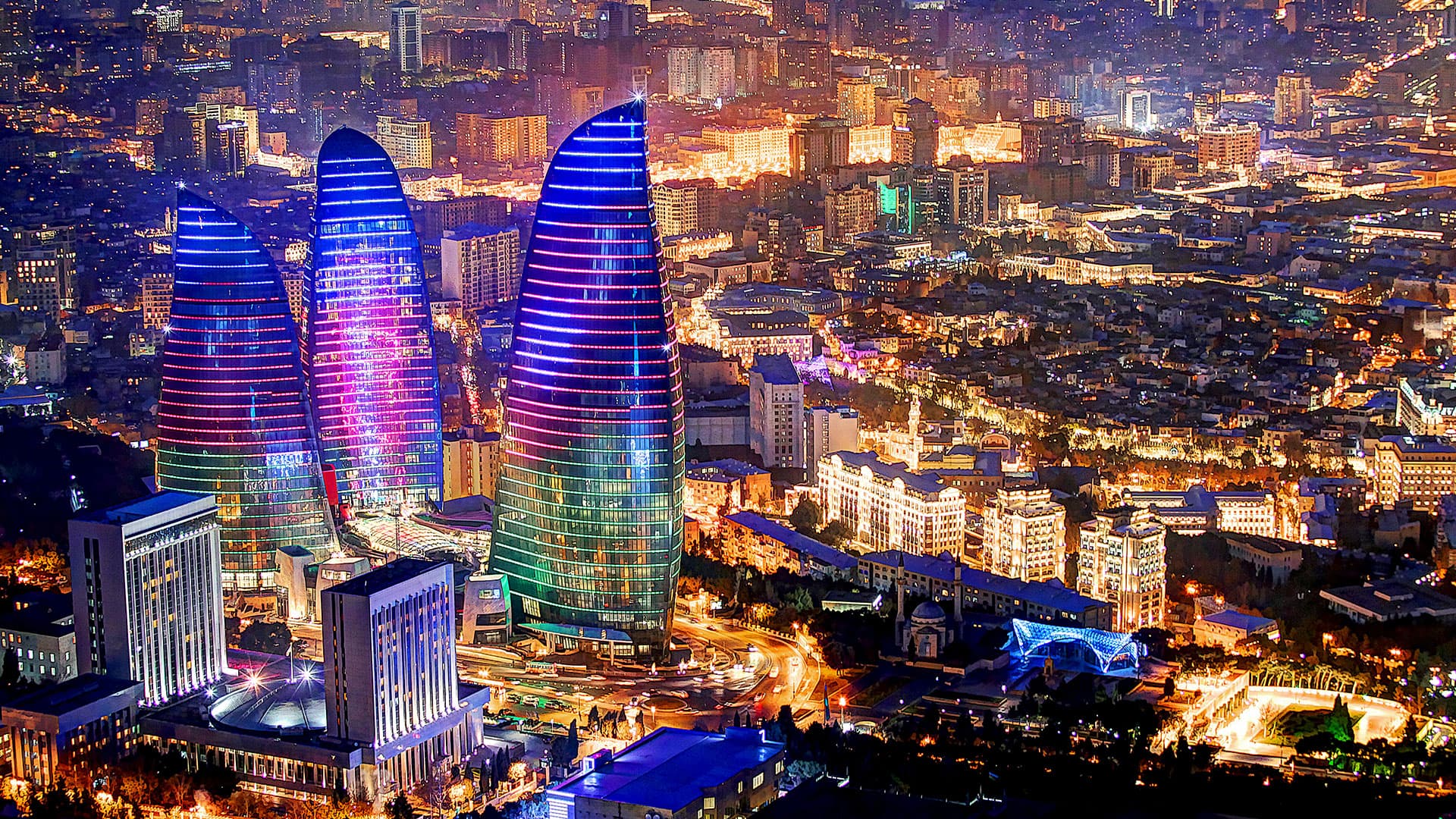
Azerbaijan offers a fascinating blend of ancient and modern, from Baku's futuristic Flame Towers and UNESCO-listed Old City to ancient fire temples and petroglyphs at Gobustan. The country sits at the crossroads of East and West, combining Persian, Turkish, and Russian influences. Visitors can explore the historic Silk Road city of Sheki, hike in the scenic Caucasus Mountains, relax by the Caspian Sea, and witness natural phenomena like mud volcanoes and burning hillsides. The capital Baku features contemporary architecture alongside medieval walls, while the countryside preserves traditional village life and carpet-weaving traditions.
Best time to visit:
April to June and September to October for mild weather and blooming landscapes; July for mountain areas; Avoid summer heat in Baku
Cultural Crossroads & Natural Wonders
Azerbaijan's cultural heritage reflects its position on the ancient Silk Road, with caravanserais, mosques, and palaces throughout the country. The Novruz spring festival showcases Persian New Year traditions with fire-jumping, music, and traditional sweets. Natural attractions include the Greater Caucasus mountains for hiking, Gobustan's prehistoric rock art and mud volcanoes, and Hirkan National Park's ancient forests. The country is known for its carpet-weaving artistry, traditional mugham music, and distinctive cuisine featuring plov, dolma, and aromatic herbs. Baku's Formula 1 Grand Prix and cultural festivals attract international visitors.