
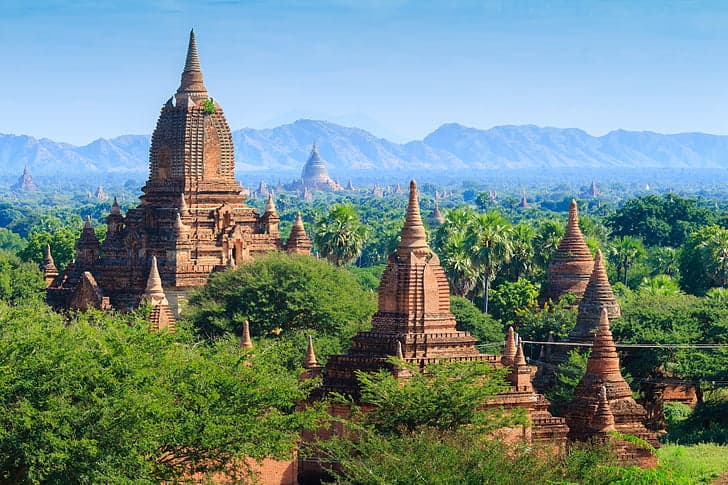
Myanmar (formerly Burma) captivates with over 2,000 temples dotting the plains of Bagan, one of Asia's most spectacular archaeological sites. The Shwedagon Pagoda in Yangon glows gold as the country's most sacred Buddhist site. Inle Lake features unique leg-rowing fishermen and floating gardens maintained by the Intha people. Mandalay serves as the cultural heart with traditional crafts and royal heritage. Myanmar's diverse ethnic groups including Shan, Karen, and Chin maintain distinct languages and customs. The country is slowly opening to tourism after decades of military rule, though recent political instability requires careful travel planning. Beaches in Ngapali and Ngwe Saung remain relatively undeveloped.
Best time to visit:
November to February (cool season); October-May generally good; Avoid hot season (March-May) and monsoon (June-September)
Buddhist Heritage & Ethnic Diversity
Myanmar's Buddhist culture is evident in golden pagodas throughout the country, with monks in maroon robes and daily alms rounds. Bagan's temple plains allow sunrise balloon rides and temple exploration by e-bike. Traditional crafts include lacquerware from Bagan, gold leaf pounding in Mandalay, and longyi (traditional sarong) weaving. Myanmar's 135+ ethnic groups celebrate distinct traditions, from Inle Lake's five-day rotating markets to hill tribe villages accessible by trekking. The colonial architecture of Yangon and traditional teak monasteries showcase architectural heritage. Burmese cuisine features tea leaf salad, mohinga (fish noodle soup), and curries influenced by Indian, Chinese, and Thai flavors. Note: Check current travel advisories due to political situation.