
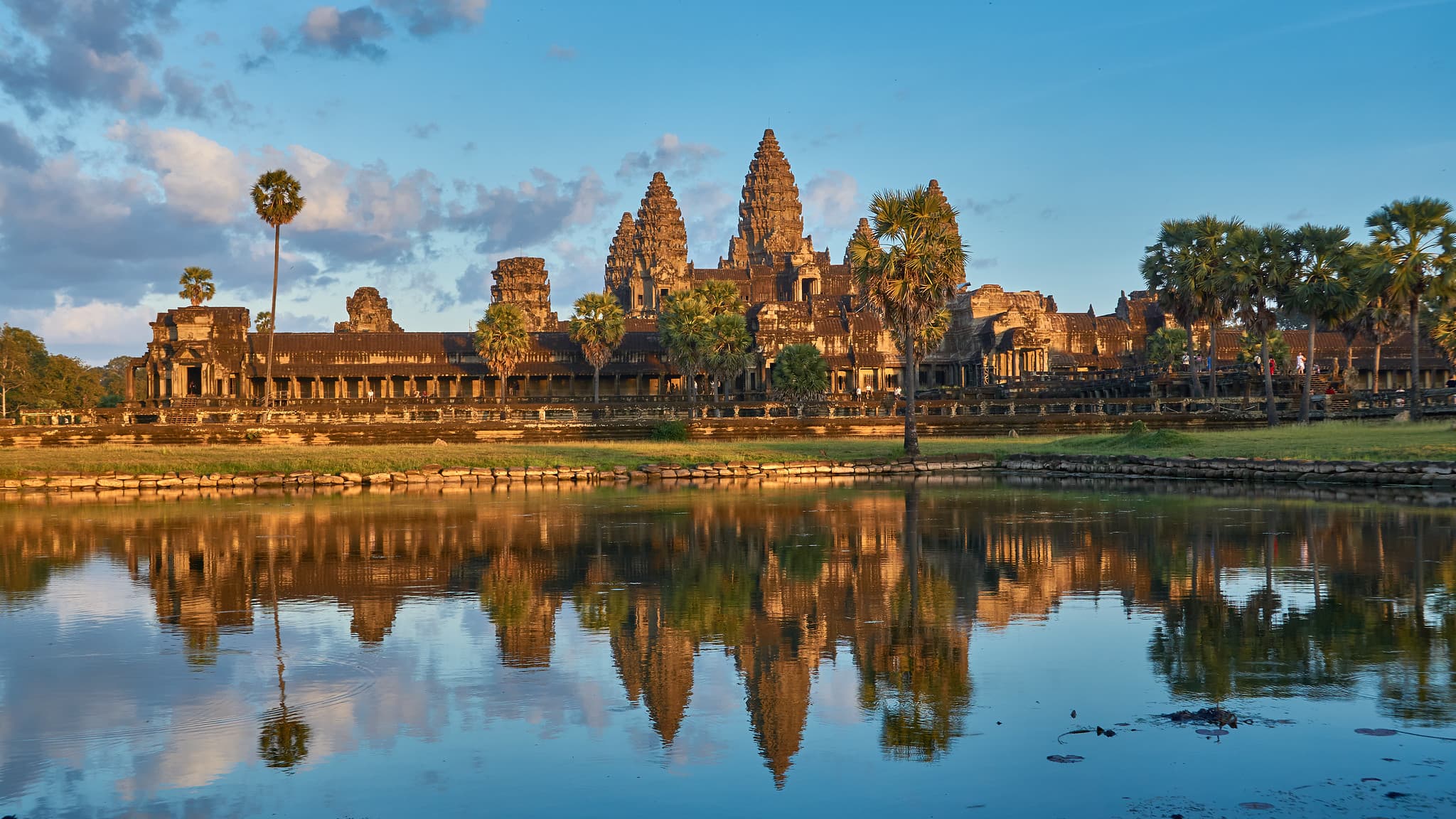
Cambodia's crown jewel is Angkor Wat, the world's largest religious monument and centerpiece of a vast temple complex that once belonged to the powerful Khmer Empire. Beyond the temples, Siem Reap offers vibrant night markets and Apsara dance performances. The capital Phnom Penh combines Royal Palace grandeur with sobering reminders of the Khmer Rouge era at the Genocide Museum and Killing Fields. Cambodia's southern coast features pristine beaches and islands like Koh Rong, while the Mekong River provides connections to floating villages and rural life. The country's warm people, delicious cuisine, and affordable prices make it accessible despite its tragic recent history.
Best time to visit:
November to March (dry season); November-February ideal for comfortable temperatures and clear skies
Ancient Temples & Cultural Resilience
The Angkor Archaeological Park contains hundreds of temples beyond Angkor Wat, including the enigmatic Bayon with its stone faces and the jungle-enveloped Ta Prohm. Sunrise at Angkor Wat and sunset at Phnom Bakheng are iconic experiences. Cambodian culture, despite the trauma of the Khmer Rouge period, celebrates traditional arts including classical dance, silk weaving, and shadow puppetry. The cuisine features dishes like amok (coconut fish curry), lok lak (stir-fried beef), and fresh Kampot pepper. Rural areas maintain traditional stilt house architecture and fishing practices. The country's recovery and development make it an inspiring destination.