
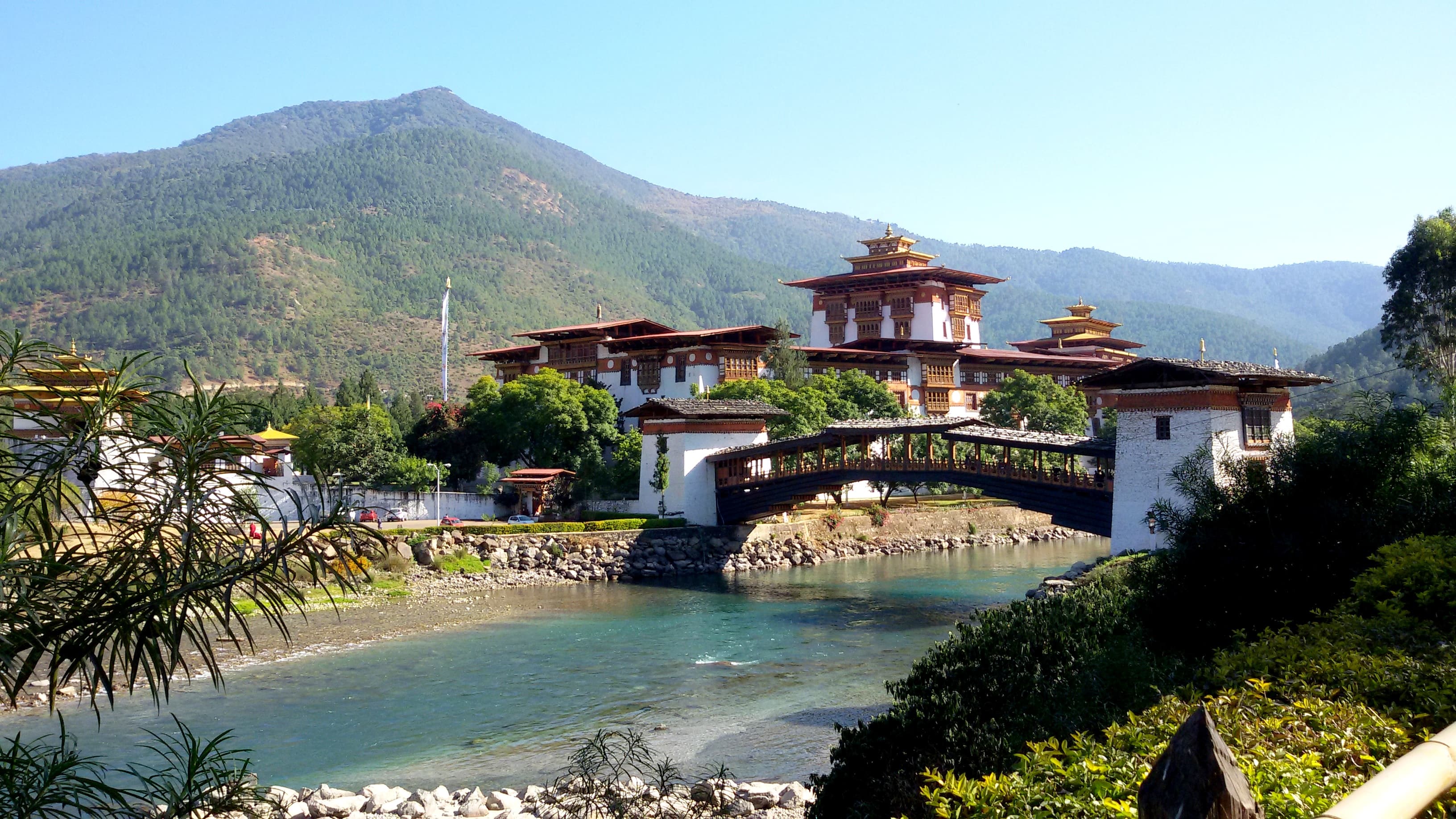
Bhutan offers a unique travel experience in a kingdom that has carefully preserved its Buddhist culture and pristine environment through controlled tourism. The iconic Tiger's Nest Monastery clings to a cliff 3,000 meters above Paro Valley, accessible via a challenging hike. Thimphu, the capital, features traditional architecture with no traffic lights and the massive Tashichho Dzong fortress. The Punakha Dzong sits at the confluence of two rivers in a stunning valley setting. Bhutan's policy of 'high value, low impact' tourism requires visitors to pay a daily fee that includes accommodation, meals, and guide services. The country's commitment to environmental conservation means it's carbon-negative and over 70% forested.
Best time to visit:
March to May (spring) and September to November (autumn); Clear mountain views, mild weather, and festival season
Himalayan Buddhism & Pristine Nature
Bhutan's Buddhist culture permeates every aspect of life, from prayer flags fluttering on mountain passes to dzongs (fortress-monasteries) serving as administrative and religious centers. Traditional festivals called tshechus feature masked dances depicting Buddhist teachings and folklore. The country's architecture follows traditional designs with ornate wood carvings and paintings. Trekking routes like the Druk Path and Snowman Trek offer stunning Himalayan views. Bhutan's environmental philosophy includes constitutional mandates to maintain forest cover and protect endangered species like black-necked cranes and snow leopards. Traditional dress (gho for men, kira for women) remains everyday wear, and archery is the national sport.